Product content & syndication Insight
Choosing a New Syndication Path: From Kroger VIP Portal to NIS
November 18, 2025
The clock is ticking for brands submitting new items to Kroger. The Vendor Item Portal (VIP), which suppliers have long relied on for new item setup (NIS), is being decommissioned. While an exact sunset date may be fluid, the impending retirement of the VIP portal means brands should prioritize an urgent transition to one of Kroger’s approved modern syndication partners.
This pivotal shift requires brands to transition from a legacy portal-based submission process to an automated, API-driven content syndication model. This is not merely a technology upgrade; it’s a strategic choice that impacts your speed to market and long-term data governance.
Kroger New Item Setup Options
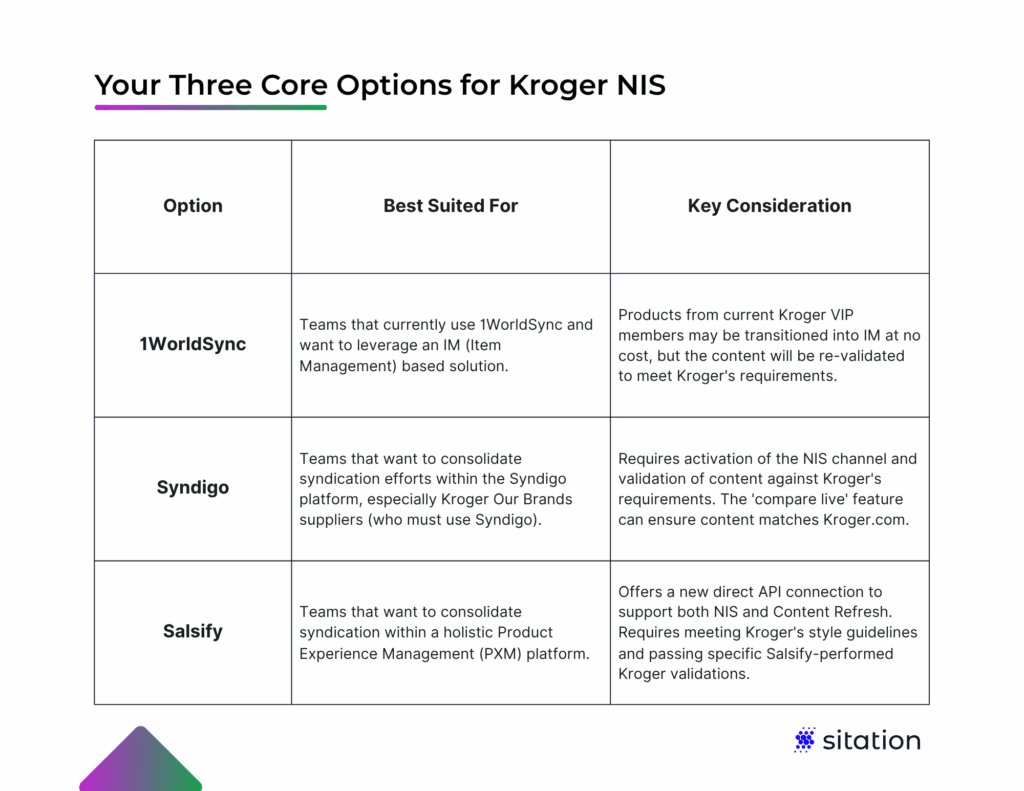
Kroger is now accepting new item setup and item maintenance data directly through the Kroger Item API (KIA), with three approved data service providers acting as the gateway. 1WorldSync, Syndigo, and Salsify present different advantages for different teams.
Kroger NIS Attribution & Review Process
Regardless of the platform you choose, successful transition and ongoing syndication will require a higher standard of data quality within a restructured content data model.
Packaging Hierarchy
A critical requirement across the new API-driven channels is moving away from a flat data model. Your chosen platform must be configured to support a Packaging Hierarchy to syndicate to Kroger successfully.
- Hierarchy is Mandatory: The new Kroger channel requires a well-formed hierarchy reflecting the relationships between Eaches, Cases, and Pallets. This is true even for non-GDSN clients and categories that historically only required Each data (such as personal care or beauty).
- Case Records are Essential: If your team is not used to supplying case-level data, this represents a significant change management effort. Establish standards and governance for detailed packaging hierarchies, even if you haven’t needed them before.
High-Quality Content
Your transition timeline and subsequent speed to market are directly tied to the quality of your product content. Poor content quality leads to rejected submissions, slowing down your onboarding process.
- Rigorous QA Process: All submissions undergo a platform-specific Quality Assurance (QA) process. Inaccuracies in images or written content will cause delays. Be prepared for multiple rounds of feedback and potential timezone delays if QA is conducted offshore.
- Consistency is Critical: Packaging verbiage that does not match the written content will be flagged. Organizations should align packaging to attribution properties and fix data issues proactively before they cause delays in the submission pipeline.
Kroger Review Process
After passing the initial platform QA, products proceed to Kroger’s internal review, which serves as the final gateway to market.
- Item Master Form Generation: An Item Master Form (IMF) is generated and sent directly to the Kroger Category Manager (CM) for approval or rejection.
- Final Acceptance or Rejection: The Kroger CM makes the final decision based on internal standards. While this process should be quick, we recommend additional buffer time to account for review cycle needs.
The Bottom Line: Transition Now
Selecting and implementing one of the three approved NIS solutions is an urgent first step to avoiding market disruption. Transitioning successfully will depend on how well your organization adapts to new data structures, governance standards, and validation processes. Taking time now to audit your content, strengthen your data model, and align internal teams will help ensure a smooth migration and a sustainable foundation for future syndication needs.
If you are interested in which of the three solutions may be a better fit for your specific organization, Sitation can help. Schedule some time with us to discuss your specific use case needs.
Keep product content and syndication running
Our managed services team runs PIM operations, taxonomy and syndication alongside your team, from part of one specialist’s week to a dedicated team.
